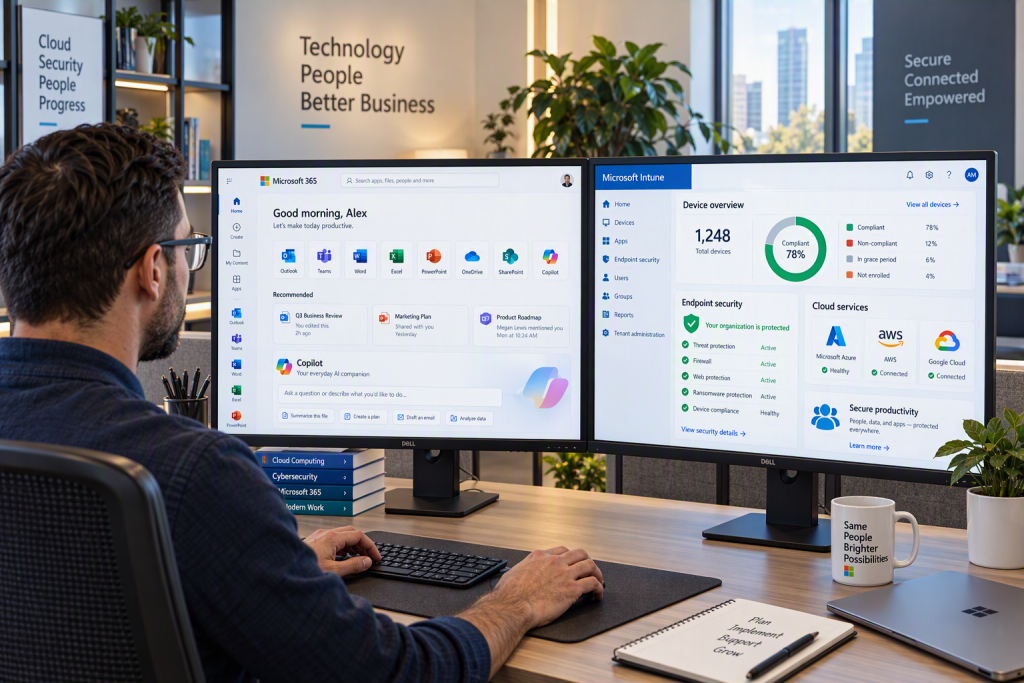
Microsoft 365 Powers the Modern Workplace
For many organisations, Microsoft 365 has become the central hub for communication, collaboration, file storage, and productivity. Microsoft describes Microsoft 365 as a cloud platform that combines productivity applications, collaboration tools, cloud services, and enterprise-grade security.
IT support engineers help organisations get the most from the platform by:
- Managing accounts and permissions
- Supporting Outlook, Teams, OneDrive, and SharePoint
- Configuring security and compliance settings
- Protecting business data
- Enabling secure hybrid and remote working
When properly configured, Microsoft 365 can streamline workflows while helping organisations maintain strong security standards.
Microsoft Intune Keeps Devices Secure Everywhere
With staff working from offices, homes, and on the move, device management has become significantly more complex.
Microsoft Intune is a cloud-based endpoint management platform that allows organisations to secure and manage devices, applications, and access policies from a central location. It supports Windows, macOS, iOS, Android, Linux, and more while aligning with Zero Trust security principles.
Using Intune, IT teams can:
- Deploy new devices remotely
- Enforce security policies
- Manage software and operating system updates
- Protect company data on personal devices
- Remotely wipe lost or stolen devices
For businesses embracing flexible working, Intune has become an essential component of modern IT management.
Cybersecurity Tools Have Become Essential
Cybersecurity is no longer a specialist service. It’s a core responsibility of every IT support provider.
Today’s security stack typically includes multiple layers of protection, including:
- Endpoint Detection and Response (EDR)
- Advanced antivirus protection
- Email security and phishing protection
- Multi-factor authentication (MFA)
- Vulnerability scanning
- Web filtering
- Security awareness training
- Dark web monitoring
Modern EDR solutions continuously monitor devices, identify suspicious behavior, and help security teams respond to threats in real time, offering protection beyond traditional antivirus software.
The goal is simple: reduce risk before a cyber incident affects the business.
AI Assistants Are Accelerating IT Support
One of the fastest-growing additions to the IT support toolbox is artificial intelligence.
AI-powered assistants are helping engineers analyse large volumes of technical data, identify potential issues, and accelerate troubleshooting. Modern AI for IT Operations (AIOps) platforms are designed to detect anomalies, correlate alerts, and provide proactive insights across increasingly complex IT environments.
IT support teams are increasingly using AI to:
- Analyse technical logs and alerts
- Research solutions more quickly
- Summarise technical information
- Produce documentation and knowledgebase content
- Improve response times and consistency
Importantly, AI isn’t replacing experienced engineers. Instead, it helps eliminate repetitive tasks, allowing IT professionals to focus on strategic advice, business improvement, and customer support.
What This Means for Your Business
The tools available to IT support engineers in 2026 are more powerful than ever, but technology alone doesn’t solve business challenges.
What delivers real value is the combination of:
- Proactive monitoring
- Modern cloud management
- Strong cybersecurity practices
- Effective device management
- Expert human decision-making
Businesses that embrace these technologies can reduce downtime, improve security, support flexible working, and create a more productive environment for their teams.
Technology should be an enabler of growth, not a source of frustration.
Final Thoughts
The modern IT support engineer’s toolbox is packed with sophisticated technologies, from monitoring platforms and cloud management solutions to cybersecurity tools and AI assistants.
Yet the most valuable tool remains expertise.
Knowing how to apply the right technology at the right time is what keeps businesses secure, productive, and prepared for the future.
Need Advice on Your IT Environment?
Whether you’re looking to strengthen security, improve Microsoft 365 management, support remote workers, or reduce downtime, our team is here to help.
Get in touch for a friendly conversation about how your IT systems can better support your business goals.